
Postpartum Hair Loss: How I Reversed My Shedding Naturally
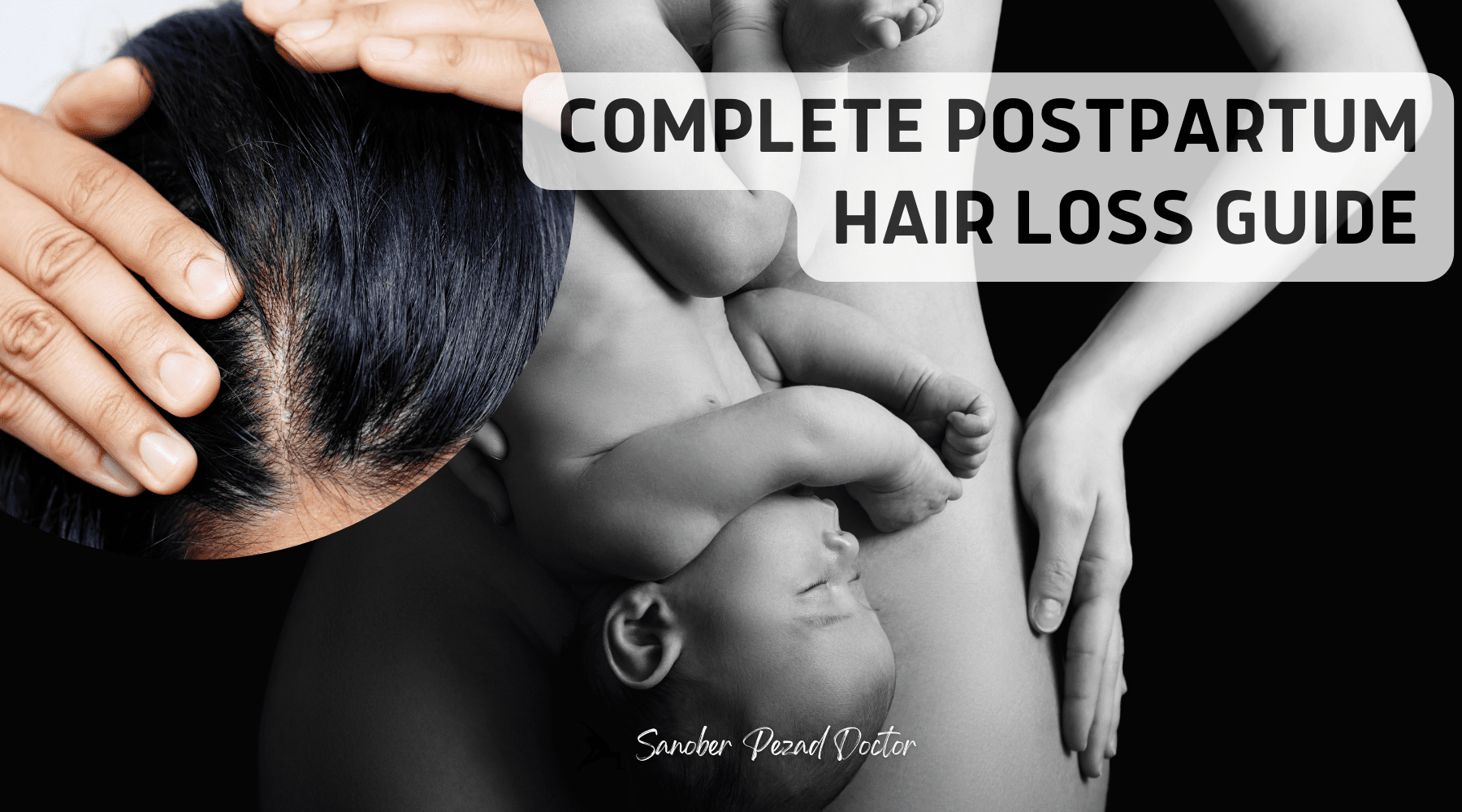
Hey mama! If you’re reading this, you might be staring at your hairbrush in horror, or just feeling like your hairline is shrinking. I’ve been there after both of my pregnancies.
And today I want to share everything that helped me stop the shedding and actually regrow hair. This isn’t theory, this is what worked for me, with medical studies, and with love & patience.
If you want to see it in video form (with before/after, and all the real talk), you can watch my full story here: YouTube video: How I reversed postpartum hair loss -> click here.
What Is Happening When You Lose Hair Postpartum
Many people have heard of telogen effluvium. This is when a large percentage of hair follicles go into a resting phase (telogen) all at once, then fall out several months later. Post-delivery, the hormones that kept hair in its growth phase drop, stress is high, you may be iron-deficient, sleep-deprived, and hence- shedding everywhere.
While this is very common, it’s not inevitable that you stay in shedding mode. With the right checks and treatments, you can reverse it.
Key Things You Should Look Into (Hidden Saboteurs)
Before anything else, I recommend checking for and treating these, because if they’re off, nothing else works well:
- Iron/ferritin levels– Many women postpartum are significantly low. Low iron impairs hair follicle function.
- Thyroid function– Postpartum thyroiditis or other thyroid dips are common and can worsen shedding.
- Vitamin D, B12, Zinc– Deficiencies here show up often in new moms and are critical for hair health.
- Stress/sleep/rest– Your body’s recovery depends heavily on how much rest you can get, and how well you manage stress.
My 7-Step Regrowth Routine That Worked
Here’s what I did. All are things I used, or still use. Some took weeks to show results; others helped right away. It’s a full-body + scalp + lifestyle approach.
| . | What I Did | Why It Works / Evidence* |
|---|---|---|
| 1 (My Biggest Game-Changer): Red Light Therapy (Revian Cap)** | I used the Revian Red LED cap 4-5/week for about 10 minutes, especially focusing on thinning spots. | The Revian Red system uses dual-wavelength LED (620 nm & 660 nm), gives full scalp coverage, and is hands-free. Clinical trials show that users ~80% compliant got ~26.3 more hairs per cm² at 16 weeks compared to placebo. |
| 2: Scalp Massage | I did 5–10 minutes most days, either with fingers or a soft massager. | Scalp massage improves blood flow, oxygen, nutrient delivery to follicles; helps reduce stress, and studies show massage can increase growth factors in follicles. Also supports transitioning more hair into the growth phase. |
| 3: Correcting Iron Deficiency | My ferritin was very low. Once I started iron bisglycinate, things started turning around. Less shedding, more new hair. | Iron is essential for the DNA synthesis and cell proliferation that hair follicles need. Low ferritin is strongly linked to thinning hair. Even modest increases in iron (if deficient) often lead to visible changes over a few months. |
| 4: Rosemary + Castor Oil Blend | A few times per week I mixed rosemary essential oil (diluted) with castor oil. Did it overnight sometimes. | Rosemary oil has been shown in a study to be comparable to minoxidil in promoting hair growth. (Caveat!) Castor oil nourishes, thickens hair shaft, helps retain moisture, both help support the health of hair strands and follicles. |
| 5: Collagen Powder (Pasture-Raised / Whole Collagen) | Took it consistently (weeks, then months). You’ll notice nails, skin, everything improves in addition to hair. | Collagen provides amino acids (glycine, proline, hydroxyproline) that are structural building blocks for hair. Also helps gut + skin + healing overall. Body needs these substrates to build keratin. |
| 6: Prenatal Vitamins + Zinc | Kept taking the prenatal after pregnancy, added zinc (within safe dosage). Made sure other micronutrients (B vitamins, etc.) were included. | Zinc deficiency is associated with telogen effluvium. Prenatal vitamins often have folate, B12, etc. All these vitamins support red blood cell health, enzyme systems, and help reduce oxidative stress in follicles. |
| 7: Time, Rest & Stress Management | I know this is hard with a newborn + toddler. But pushing for even small rest, deep breaths, asking for help, doing what I can to relieve mental load made a huge difference. | Stress hormones (cortisol, etc.) signal hair follicles to go into resting/shedding phases. Mind-rest and supportive emotional health help bring follicles back into the growth phase. Also supports sleep & healing…key for recovery. |
* Note: There are many studies and reviews of low-level light therapy (LLLT) / LED devices improving hair density in both men and women. A meta-analysis in 2021 found that home-use LED caps, combs, helmets in the 620-678 nm range led to significant increases in hair density versus sham/placebo. Also, a specific study of the Revian system showed robust hair regrowth in persons compliant with treatment.
Bonus: Colostrum & Healing After Traumatic Delivery
I want to add this because it helped me deeply (especially after my first delivery, which was traumatic). Colostrum isn’t just for babies. It has immune factors, growth factors, and repair components that can help your body heal tissue, reduce inflammation, support gut healing, and possibly support hair recovery by helping your whole system get back into balance.
Make sure you choose whole colostrum (minimally processed, retaining immunoglobulins, growth factors) for maximum benefit.
Putting It All Together + Why It Took Time
Recovering from postpartum hair loss is not instant. Hair grows slowly. Hormonal, nutritional, physical, and emotional healing all have to align. Even when you do everything right, shedding may continue for a couple months, before you see regrowth. Here’s what I learned:
- Consistency is non-negotiable.
- Tracking helps (photographs monthly, scalp check-ins).
- Celebrate small wins- tiny baby hairs are real wins.
- Be gentle with yourself. It’s not vanity, it’s healing.
What to Watch Out For
- Avoid products/devices that overpromise “overnight” results.
- Be cautious with essential oils. Always patch test; dilute rosemary oil well.
- Work with your doctor to check labs (iron, thyroid, vitamins).
- If you have a form of scarring alopecia, pattern hair loss, or other dermatologic disease, consult your dermatologist.
My Recommendation: Try the Revian LED Cap
If I were to pick one thing I’d tell every mom in shedding mode to try, it’s the Revian Red LED Cap. It was my anchor in this journey. It delivers dual‐wavelength LED, good scalp coverage, it’s hands-free, and backed by study.
Myths About Postpartum Hair Loss
- “Cutting your hair stops shedding.” – False.
- “It’s only stress.” – False. Nutritional deficiencies play a huge role.
- “Oils can regrow hair overnight.” – False. They help, but patience is key.
Final Thoughts
Your hair loss post-baby DOES NOT define you. You will get through this, and with nurture, rest, and evidence-backed treatments, you can see regrowth. It’s taken me months of consistency, but seeing new hair, feeling healthier, gaining confidence… that’s priceless.
If you want all the details and visuals, don’t miss my full YouTube video.
You got this mama!
Let’s connect. I’d love to hear from you.
Continue to glow, thrive, and shine as always.
Sending lots of healthy and happy wishes your way.
P.S.- If you like what I share, consider Subscribing to stay connected. I do NOT spam. Promise!
FAQs About Postpartum Hair Loss
Most women notice shedding around 2–4 months after delivery, with the peak at 4–6 months. By 9–12 months postpartum, hair usually returns to its normal growth cycle as hormones stabilize.
Not completely. It’s a natural part of the hormonal reset after pregnancy. But you can reduce severity by correcting iron and zinc deficiency, maintaining a protein-rich diet, using gentle scalp massage, trying red light therapy, and managing stress.
Breastfeeding itself doesn’t directly cause more shedding. However, it does increase your nutritional demands, so it’s crucial to ensure you’re getting enough protein, iron, and key vitamins.
If hair loss continues beyond 12 months, is patchy, or if you notice other symptoms like fatigue, weight gain/loss, brittle nails, or mood changes, consult a dermatologist. This may indicate thyroid imbalance, anemia, or another condition.
Many women benefit from natural approaches such as:
Red light therapy caps like Revian LED Cap
Collagen supplementation (pasture-raised is ideal)
Bovine colostrum for healing and recovery
Rosemary + castor oil scalp massage
Stress reduction through meditation or mindfulness
Prenatal vitamins and zinc
For full details and my personal journey, watch my YouTube video 👉 Reversing Postpartum Hair Loss Naturally.
Not everyone, but up to 90% of moms do.
No. Unless there’s an underlying condition (like thyroid disease, PCOS, or chronic deficiency).
No, but shorter hair may make shedding less noticeable.
Not recommended while breastfeeding. Consult your doctor.
References
- Malkud S. Telogen effluvium: A review. J Clin Diagn Res. https://pmc.ncbi.nlm.nih.gov/articles/PMC4606321/
- Jimenez JJ, Wikramanayake TC, et al. Low level laser therapy for hair regrowth. Lasers Surg Med.2014 https://pubmed.ncbi.nlm.nih.gov/26690359/
- Murata K, et al. Increase in hair thickness by scalp massage. Eplasty. 2016 https://pmc.ncbi.nlm.nih.gov/articles/PMC4740347/
- Genovese L, et al. Effects of a nutritional supplement containing collagen peptides on skin, hair and nails. J Cosmet Dermatol. 2020
- Trost LB, Bergfeld WF, Calogeras E. The diagnosis and treatment of iron deficiency and its potential relationship to hair loss. J Am Acad Dermatol. 2006 https://pubmed.ncbi.nlm.nih.gov/16635664/
- Panahi Y, Taghizadeh M, Marzony ET, Sahebkar A. Rosemary oil vs minoxidil in androgenetic alopecia: a randomized comparative trial. Skinmed. https://pubmed.ncbi.nlm.nih.gov/25842469/
- Ogawa Y, Kinoshita M, Shimada S, Kawamura T. Zinc and hair loss: a review. Dermatol Res Pract.2010 https://pmc.ncbi.nlm.nih.gov/articles/PMC5852775/
- Playford RJ, Weiser MJ. Bovine Colostrum: Its Constituents and Uses. Nutrients. 2021;13(1):265. Published 2021 https://pmc.ncbi.nlm.nih.gov/articles/PMC7831509/